The Katsina State Agricultural and Rural Development Authority (KTARDA) has commenced the training of 756 agricultural extension workers and 34 block extension supervisors across the three senatorial zones of the state Daura, Funtua, and Katsina.
Hikaya Newspaper reports that the exercise, held simultaneously on Tuesday, August 26, 2025, aims to strengthen climate-resilient farming through the production of eight major crops.
Speaking at the opening in Katsina Zone, the Managing Director of KTARDA, Alhaji Abubakar Dabo, welcomed participants and explained that the training was designed to enhance food security and support the state government’s agricultural transformation agenda.
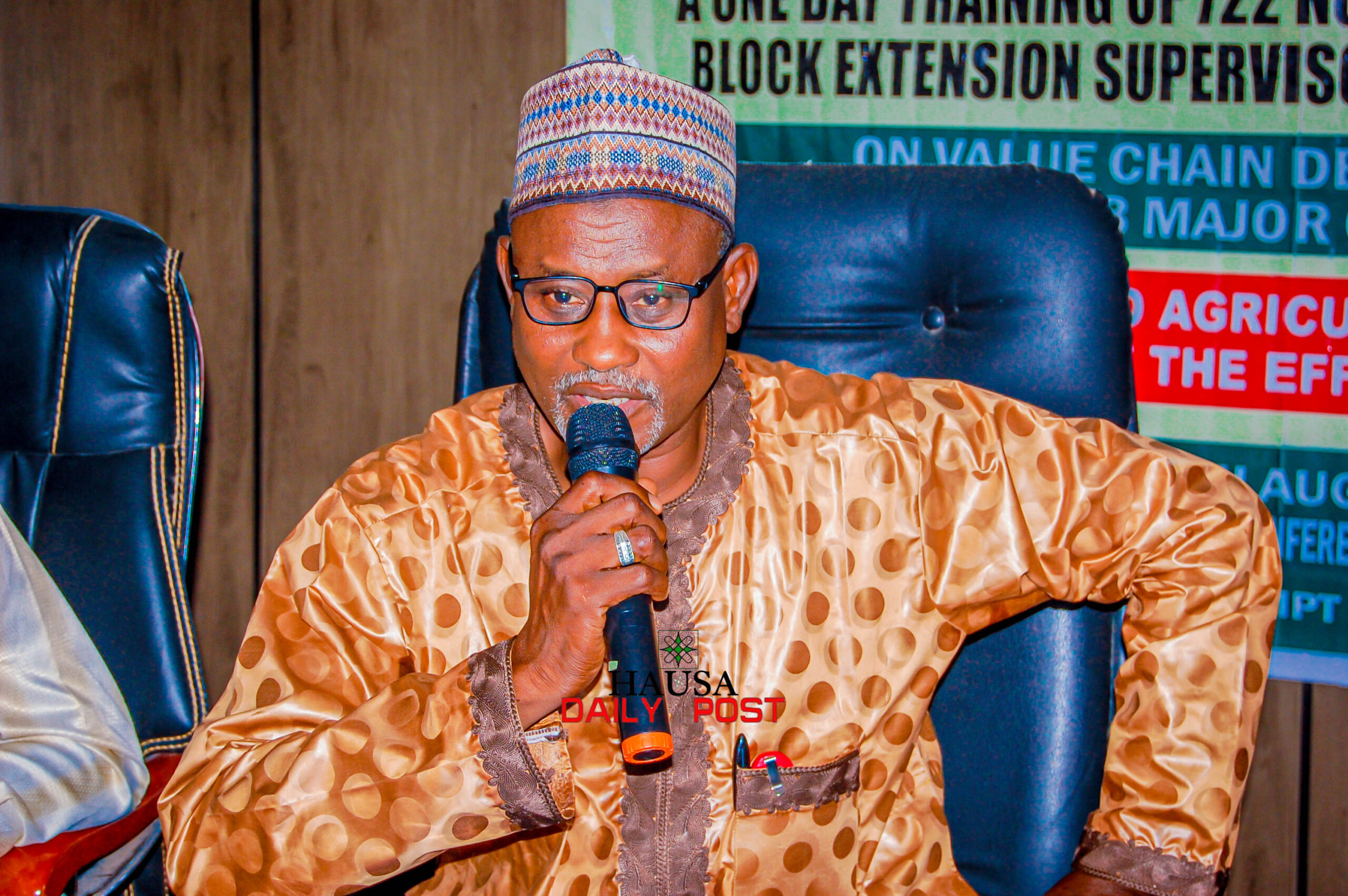
He disclosed that the extension workers were drawn from all 34 local government areas: 268 from Daura Zone covering 12 LGAs, 245 from Funtua Zone with 11 LGAs, and 243 from Katsina Zone with 11 LGAs. He urged the trainees to apply the knowledge gained in their respective communities to improve farming practices.
At the Daura Zone session, held at the Government Girls Secondary School Conference Hall, KTARDA’s representative, Abdullahi Ibrahim, commended the state government for prioritizing agricultural development in rural areas. He noted that the training would not only improve the skills of extension workers but also create stronger links between farmers and agricultural experts. Similarly, at the Funtua Zone session in Bala Abdullahi College of Administration, KTARDA’s representative, Kabir Dabo Tasha, stressed that extension services remain the backbone of sustainable agriculture and called on participants to serve as change agents in their localities.
Declaring the training open in Katsina Zone, the Director of Irrigation at the Ministry of Agriculture and Livestock Development, Bashir Bala Zango, who represented the Commissioner, Professor Ahmed Mohammed Bakori, described the exercise as part of Governor Dikko Umar Radda’s strategic plan to revive agriculture in the state. He emphasized that climate change has continued to affect yields and incomes, hence the need for proactive measures such as this training.
During the technical sessions, experts delivered thought-provoking lectures on crop-specific extension guides. Papers on Rice and Cotton Production emphasized improved seed varieties, water management, and pest control methods. Presentations on Maize and Groundnut Production highlighted soil fertility management and the adoption of climate-smart techniques. Similarly, papers on Sesame and Cowpea Production focused on disease resistance and market opportunities, while sessions on Sorghum and Soybean Production underscored sustainable land use and value-chain development.
The lectures were delivered by experts including Dr. Tijjani Abu Rimi, Mansur Suleiman, Usman Majehaji, and Hussaini Shehu Shema at Katsina Zone; Tanimu Hamza, Shehu Isma’il, and Abdullahi Ibrahim at Daura Zone; as well as Kabir Dabo and Muhammad Maikudi at Funtua Zone. The event drew participants from government agencies, local communities, and farmer associations, all of whom expressed optimism that the program would boost agricultural productivity and resilience in Katsina State.